
















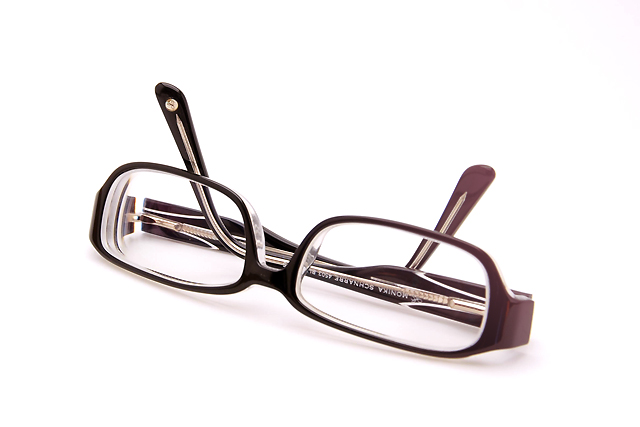
[dropcap]C[/dropcap]hoosing the right piece of eyewear is not to be taken lightly, especially since it deals with one of five senses. Important features to consider are comfort, safety and image– all of which depend on the quality of the lenses and our personal taste. Here we look some of the options available, and offer helpful tips on what to look for in a great pair of eye glasses.
[tabs]
[tab title=”Glass and Plastic” icon=”entypo-book”][/tab]
[/tabs]
The practice of using glass lenses is somewhat outdated as they have a higher risk of shattering; thus causing harm to the eye. Fortunately, CR-39 polymer–a material now most commonly used in manufacturing corrective lenses– made a breakthrough in the 1940s throughout America so it now the popular prescribed lens.
[tabs]
[tab title=”Polycarbonate and High-Index Plastic” icon=”entypo-book”][/tab]
[/tabs]
A few decades after plastic made a boom in the eyewear industry, impenetrable substance used for visors and bank panes stepped into the game. Polycarbonate lenses are even lighter and more dent proof than plastic. They also make excellent choice for safety goggles, as well as eyewear for children and athletes. The newest contender in the material race is the high-index plastic that allows for thinner, lighter lenses and eyeglasses. And are known to be more visually appealing and comfortable to wear as well.
[tabs]
[tab title=”Refractive Index and Abbe Value” icon=”entypo-book”][/tab]
[/tabs]
Refraction index is basically the ratio of the speed of light when it travels through air to speed of light when it passes through the lens material. Why is this important to consider when picking out your glasses? If you’re wanting thinner lenses, it’s important that you pick a higher refractive index as this will give you that lightweight look. Now when it comes to Abbe Value, it is used to describe how much a lens material causes light to disperse. Opticians often opt for lens materials that have higher Abbe value to minimize distortion–a issue that occurs more frequently in materials with lower Abbe value. CR-39 plastic lenses tend to have one of the highest Abbe values available. However, the thinner and lighter the lenses the lower the Abbe value. This is why those with a higher prescription and choose thinner lenses usually have to adjust to the chromatic aberration (i.e fuzziness).
[tabs]
[tab title=”Edge Thickness and Aspheric Design” icon=”entypo-book”][/tab]
[/tabs]
Don’t disregard any of the key lens features. The failure to choose the right type of lenses can lead to several issues down the road, such as a list of dry eye causes, or other serious conditions. Make sure to follow the prescribed guidelines when thickness is in question. The thinnest part in concave lenses is the optical center, like the edges are in convex ones. More advanced technology has enabled aspheric eyeglasses to be made with flatter curves than traditional lenses, therefore creating slimmer, more flattering glasses. So the Aspheric design enhances your look by minimizing the unpopular eye magnification effect (less Steve Urkel).
[tabs]
[tab title=”Coatings and Treatments” icon=”entypo-book”][/tab]
[/tabs]
Boosting the strength of your lenses depends on various essential coatings and treatments. Anti-scrape (or anti-scratch) coating will protect the lens from scratches that can occur with continual use. To reduce reflection, opt for an anti-reflective coating to gain more clarity and contrast. For those wanting their eyeglasses to double up as sunglasses, choose a UV-blocking treatment for the lenses as this can shelter the eyes from the sun. Photochromic eyewear, for example, works wonderfully in darkening the lenses when in high-energy and UV light rays, and swiftly returns to transparent mode when indoors. These are about a few of the added features that you have in your disposal.
Don’t mar your vision by denying yourself a quality pair of appropriate lenses. Not only will they keep your eyes healthy but they will make the overall experience richer and more comfortable.




My dad used to have glass lenses and his vision was so bad that the glasses left permanent grooves in his nose.
i will keep this handy since i wear glasses -craftyone