
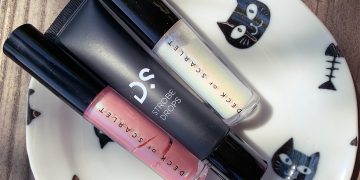


















So let’s put this issue to rest.
No company wants to be the first to admit their product is in any way harmful or addictive, and for all we know the lip balm industry is innocent. But as lip balm addicts continue to grow in numbers, develop support groups on Facebook and unite to kick the habit on sites such as Lip Balm Anonymous, it’s getting harder to believe there’s no truth to their claims. To them, lip balm is to drug as dope head is to addict.
But is lip balm a drug?
According to the FDA, yes, it is but not a prescription drug. People often assume that most of products found in the health and beauty aisles are simply classified as cosmetics. While some goods such as skin moisturizers, toothpastes, perfumes and lipsticks are legally regulated as a cosmetic, treatments for dandruff or acne and skin protectants such as lip balms and diaper ointments are considered drugs. The FDA notes these “drugs must either receive pre-market approval by FDA or conform to final regulations specifying conditions whereby they are generally recognized as safe and effective, and not misbranded. Cosmetic products and ingredients are not subject to FDA pre-market approval authority, with the exception of color additives.”
So every lip balm brand must be approved by the FDA before it hits the stores and grazes your lips. I guess that’s why every lip balm corporation I contacted (those who actually answered the phone or returned my calls) gave me the same one-liner: “We’re FDA approved.”
Well, my friends, so are cigarettes, medications and alcohol—but that’s another story.
Nevertheless, this is where the professionals come in.
Dr. Monte Meltzer, chief of dermatology at Union Memorial Hospital in Baltimore, began studying the effects of lip balm ingredients after noticing many of his patients (mostly women) were habitual users of mediated lip products. He believes the product is addictive. The ingredients that cause the tingling and soothing sensation on the lips is what keep users coming back he says. “Lips are an erogenous zone—it tingles. It’s an enjoyable sensation. The companies that make lip balm have discovered this over years and years. What is the reason for putting [those ingredients] in there? Their purpose is to exfoliate, or peel down, the top layers of skin exposing the under layers, which gives the lips more sensation.”
That’s because medicated products that contain those ingredients are used to get rid of the flakiness that occurs when lips are dry, says Dr. Charles Zugerman, a professor of dermatology at Northwestern University and an long-time adviser to Blistex. “These [components] are put in at very small amounts. [Ingredients such as] phenol and menthol serve as pain relievers,” while others, such as salicylic acid makes the lips smoother by removing the keratin.
Keratin, which your lips need, says Meltzer. This protein, found in very top layers of the skin is dissolved by salicylic acid providing less protection to the lips. Frequent use (more than five times a day) can cause burning or inflammation of the lips.
The technical term for those symptoms is called cheilitis, says Kundu. Cheilitis is commonly caused by environmental factors or by lip-care products. “Sometimes when you put [lip balm] on, you feel the need to keep putting it on because it’s irritated.” But that, says Kundu, can further irritate your lips.
The Solution
There are no addictive ingredients in lip balms but frequent habitual use can lead to addictive behavior. Lip balm addicts are not wrong for asserting that they are addicted and the lip balm corporations are not hiding the truth when they say their products don’t include addictive ingredients. But including certain ingredients keeps customers coming back.
“This is an ingenious way to sell something,” Meltzer says. “Because you’re adding oil and then peeling away skin, which requires more oil—thus the lip balm!”
“Lips are more vulnerable to the environment than any other part of the face,” says Begoun. “Whether due to cold weather, an arid climate, or from constant lip licking, dry, chapped lips are a pain.” Dermatologists and lip balm companies agree that licking your lips can make dry lips worse. Begoun suggests that ingredients such as lanolin, oils of any kind (including castor oil, lanolin oil, safflower oil, almond oil, and vegetable oil), and shea and cocoa butter are good alternatives to what is regularly offered in stores.
Kundu suggests an even simpler option: petrolatum (or petroleum jelly). “You don’ have fragrances or different oils in there—no phenol, menthol or salicylic acid, Kundu says. “It’s doesn’t have anything in it. Keep it simple. Less is more.”
For those trying to break the habit, check out Lip Balm Anonymous.com. Crossman says the 12-step program has helped many addicts put down the crackstick.
If that’s not your scene, Lejuez suggests developing a simple behavioral plan: gradually cut down the amount of times you use lip balm a day until the habitual addiction stops. Some users may need a friend’s help to encourage and reinforce quitting. “You have to consequences, either positive or negative, that are more extreme than the benefits of using the product,” he says. It’s important to set behavioral goals.
Here’s a plan.
“Think of an organization you can’t stand and you write out three checks to them for $50 and [let] your friend hold the checks” Lejuez says. “At the end of week, if you haven’t met your goal, [your friend will] send the check.” Patterns, he says, are hard to break but hopefully a $50 check to an organization you hate is enough to help you break that pattern.
Okay, so the plan may seem a little extreme but it could be the necessary push to halt the addiction.
Some lip balm addicts like Fiet, De Guzman and Hoffmann aren’t interested in even entertaining the idea of quitting. But addicts like Crossman, and now me, are tired of relying on a tube of wax to get us through the day. Frankly, it’s a waste of time, money and energy.
I’d love to stop using lip balm; I’m just unsure what technique will work for me. But what I do know is all this talk about lip balm addiction is making my lips dry…







Comments 1