















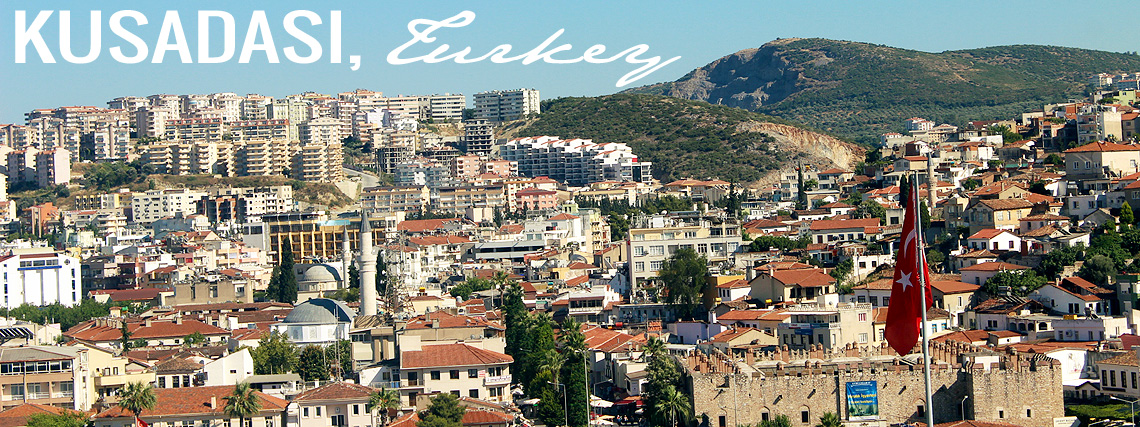
With Athens now behind us, the next port on the itinerary was Kusadasi, Turkey. This coastal resort town is a popular holiday destination, especially for those looking to visit the ancient city of Ephesus, the Temple of Cybele at Artemis and the House of the Virgin Mary. For days we were told by several fellow passengers and cruise staff that Kusadasi was one of the most anticipated port of calls for it’s bustling shopping experience and rich historical significance. So by the time we were arrived in Kusadasi, we were more than ready to get off the ship and see what the city had to offer.
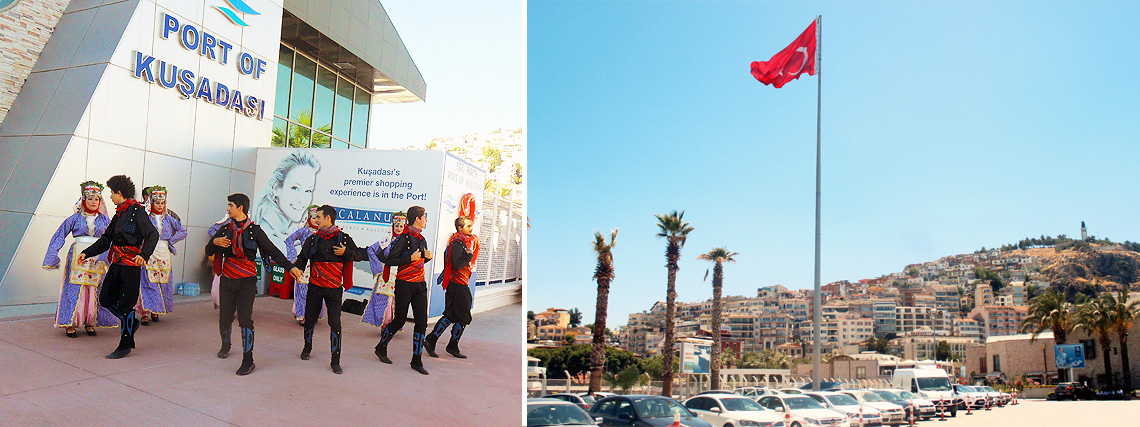
Now off the ship and moving towards the location of our tour bus, we were welcomed by a group of dancers performing traditional Turkish dances. This was by far one of the best first impressions we had of any port, even though we could only stop for a few minutes to watch the lively performance take place. When we finally arrived just outside the cruise terminal our tour bus was nowhere in sight. So after 15 minutes of walking down the row of tour buses, we headed back to the entrance only to spot a man holding a large card with our names on it. It turned out the agency we used to make our reservations booked us on a private tour of Kusadasi. So here we were with our very own tour guide and a private shuttle to explore the sights.
Our friendly tour guide named Murat soon lead us through the modern mini-mall filled with duty-free shops and inside an air-conditioned car. In no time at all we were driving along the narrow streets of downtown and heading to our first stop: the House of the Virgin Mary.
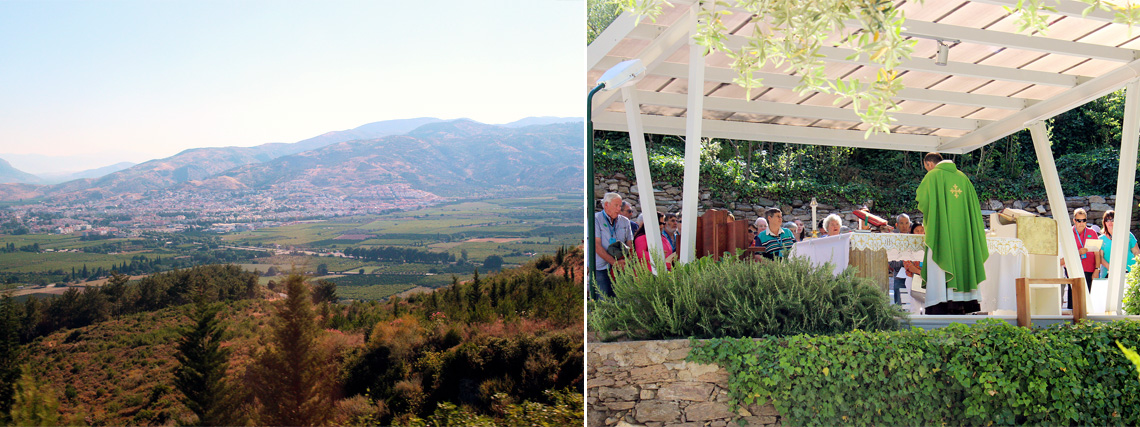
The breathtaking mountain views we saw out our window were absolutely amazing. A great precursor to the unbelievable sight we would witness in Ephesus later on.
Shortly after we arrived to the House of the Virgin Mary. Now as Catholics we felt it was only right that this special place be first on our itinerary here in Turkey. The house was discovered in the 19th century due in part to the Roman Catholic nun, Blessed Anna Katherina Emmerich’s detailed accounts (visions) of the Virgin Mary traveling to Ephesus and her life there. It is believed that the Virgin Mary spent her last days here, although it has never been proven or disproved for that matter. While this historical place is very much a religious shrine, and therefore a pilgrimage for Christians and Muslims alike, it can still appeal to many. Maybe it’s the witnessing of other curious travelers embarking on this pilgrimage from afar or the deep sense of peace and tranquility here that envelops you almost immediately. Whatever the reason—spiritual or intellectual curiosity—there is something behind the stone walls and cobblestones that pull us to explore.
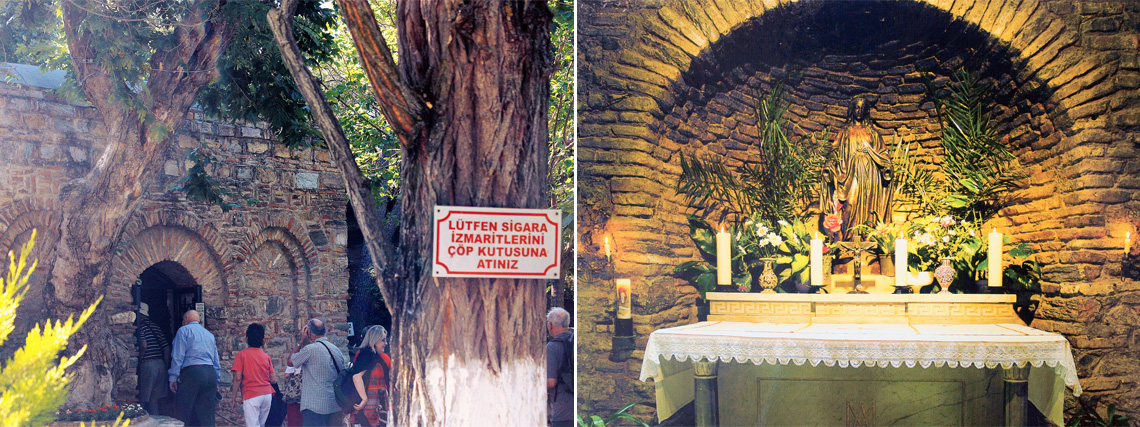
After a brief share of the history by our tour guide, we moved further along the narrow path, noticing a small private mass just off the beaten path. Within a few minutes we were in line and entering the ancient shrine only to be unprepared by the beautiful vision before our eyes. Although less elaborate then other altars we have seen, the lovely bronze statue of the Virgin Mary was surrounded by lit candles and green foliage all around. We said a few solemn prayers before moving along to let others behind us get a chance to see the shrine as well.
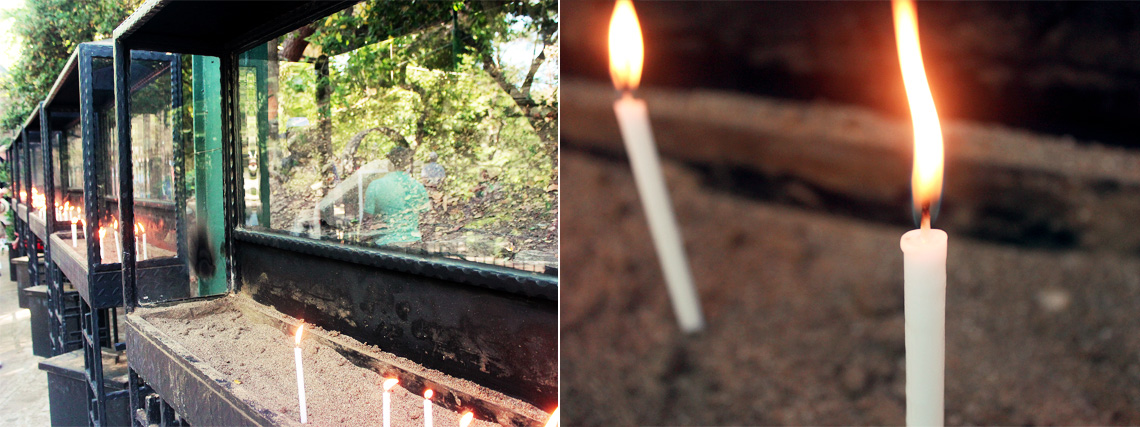
Right before we exited, we saw a few people drop a few cents in a small donation box and then grab a mini candle from the box laid on top of a table. We too also made a donation and picked up a candle. Once outside we saw a row of stalls where the mini candles we saw earlier were placed in pans of sand. We were encouraged to light our candles, say a quick prayer and place them in the sand. Call it religious sentimentality, but although this was a small act, it offered us the opportunity to experience a cathartic moment where our concerns or wishes could be poured into this one white candle and cleared from our mind as we set it in the sand.
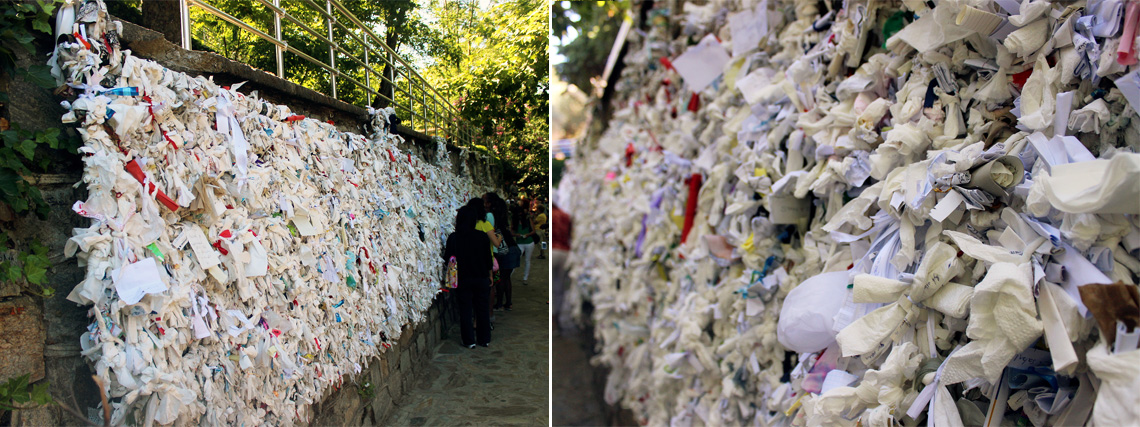
Just pass the candle lighting where the gardens and fountains of spring water said to be healing water. However what caught our eyes immediately was a very large wall called the “Wishing Wall” where visitors have tied napkins, paper and cloth to it. The idea behind this ritual is to make a wish (or prayer) while tying your object on the wall. As we made way back to the entrance, we could not resist stepping inside the souvenir shop to purchase a few of the mini glass bottles of holy water to take home.
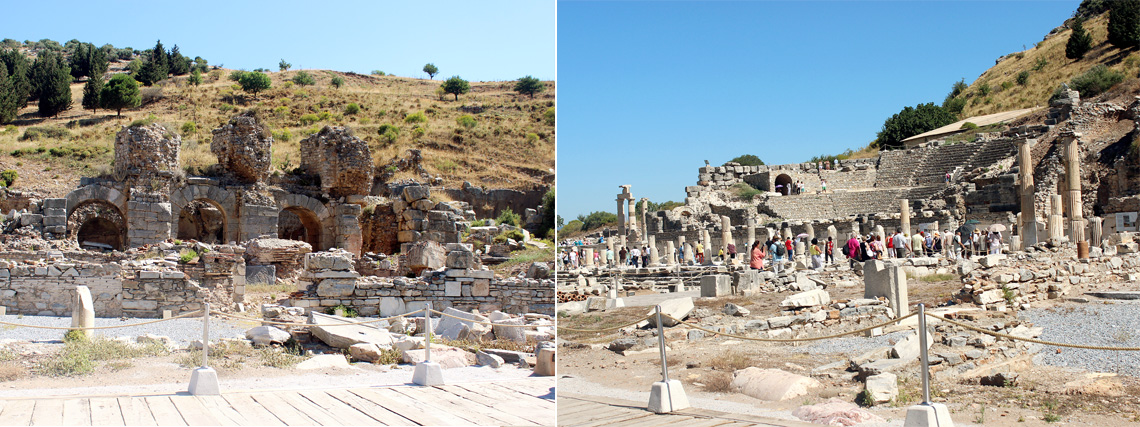
It was not long before we found ourselves back in the car and on the road to our next stop: Ephesus. When we arrived, we quickly leapt from our car and walked to the entrance to start our walking tour of this famous ancient city. For years we had heard of how magnificent the ruins at Ephesus were but it wasn’t until we came face to face with this well-preserved classical city that we truly understood the archeological significance what we were about to see.
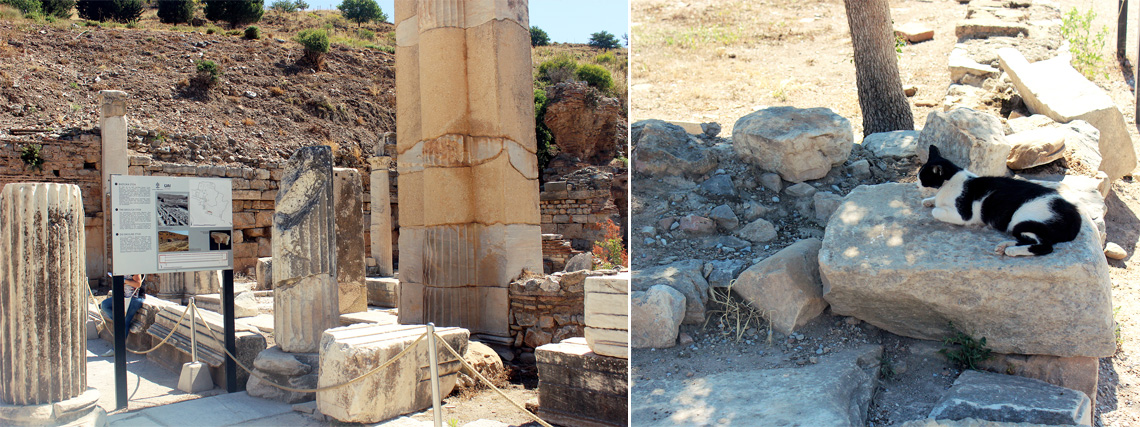
We soon passed several Roman ruins like the Roman Baths and Odeon. We could not help notice several of the stray cats resting on top of some of the ruins, especially when they quickly jumped to alert the moment they saw food near them. Something an unsuspecting tourist found out too late when he happened to pull out a sandwich from his backpack and a trio of cats began to meow at his feet. Luckily the poor tourist realized it was a lost battle and wisely gave up his sandwich to them.
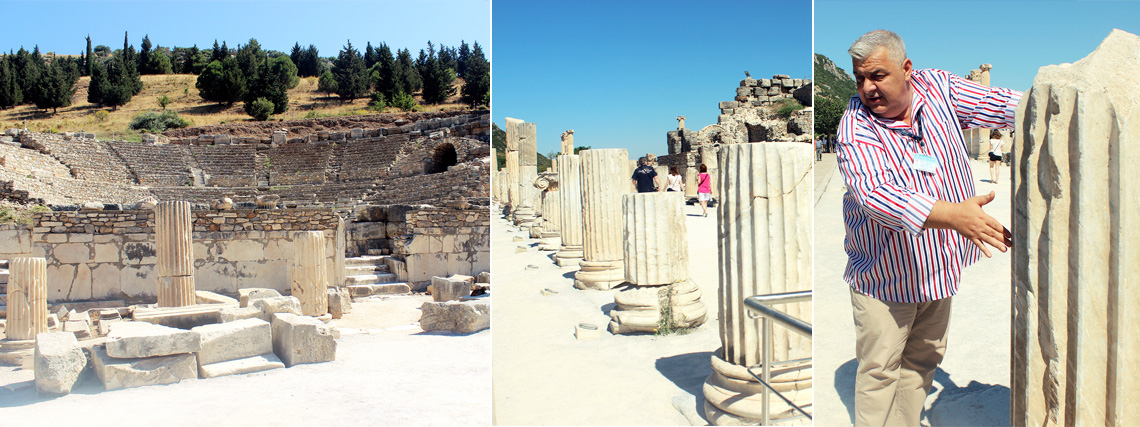
Upon inspecting the Odeon, a small roofed theater constructed in 150 AD, we were again amazed at how well preserved the structure was despite its age. We could almost envision how this once great concert hall looked as it held 1500 spectators gleefully awaiting the music and plays to start. Fortunately for us, our tour guide Murat was very knowledgeable about the area, and shared important tidbits of several of the ruins we came across, making sure to touch on the rich history behind each monument, column and stone.
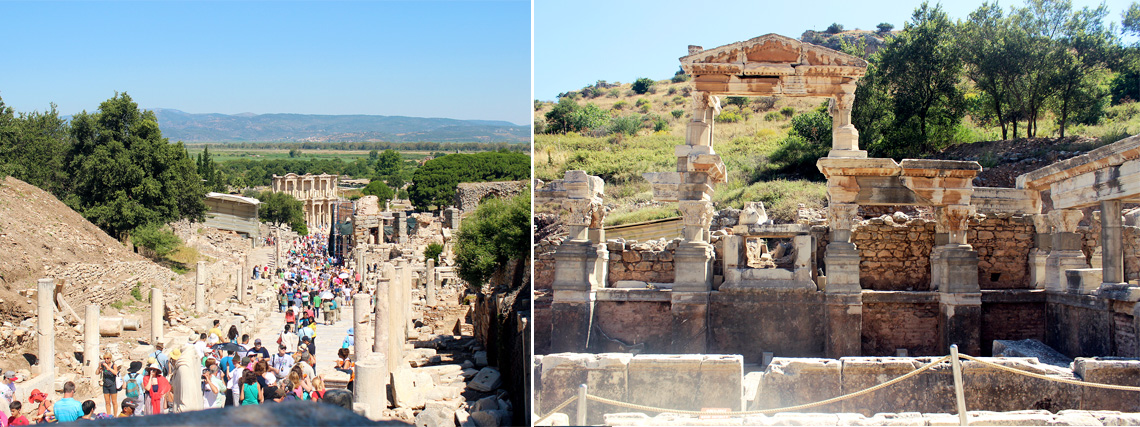
Even with the growing heat, we loved the leisure walk down the incline towards the Celsus Library. A word of advice for those making the trek to Ephesus: wear a pair of good walking shoes and put on sunblock and a hat because the cobblestones can be a bit treacherous and the heat overwhelming.
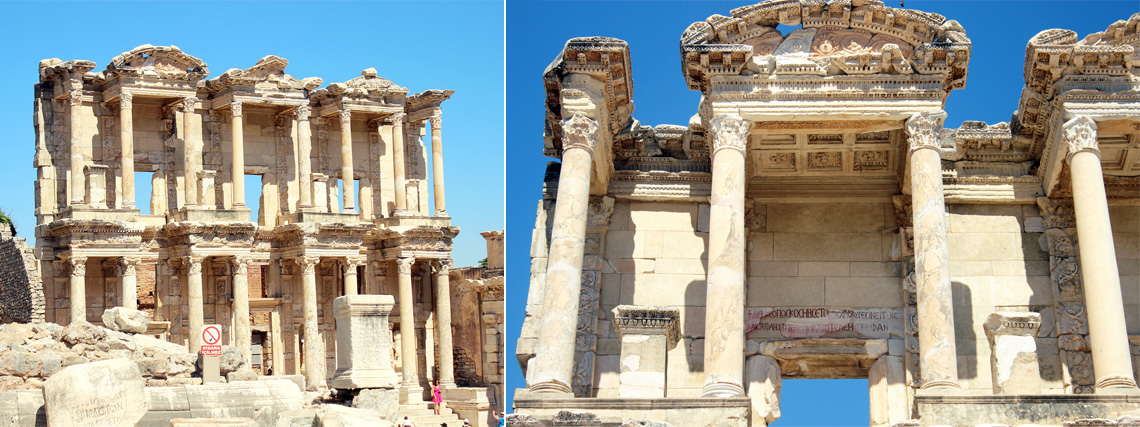
When we stopped right in front of the Celsus Library we were absolutely bowled over how well preserved the façade was. We can see why this ruin is considered one of the most beautiful structures in Ephesus. Built in 117 AD by Gaius Julius Aquila in honor of his father, the Roman Senator Tiberius Julius Celsus Polemaeanus. It was designed to serve as a monumental tomb for Celsus while also housing more than 12,000 scrolls. After taking a few (alright many) snapshots of the library we made our way along the marble road to see the famous Great Theater just opposite of the Harbor road.
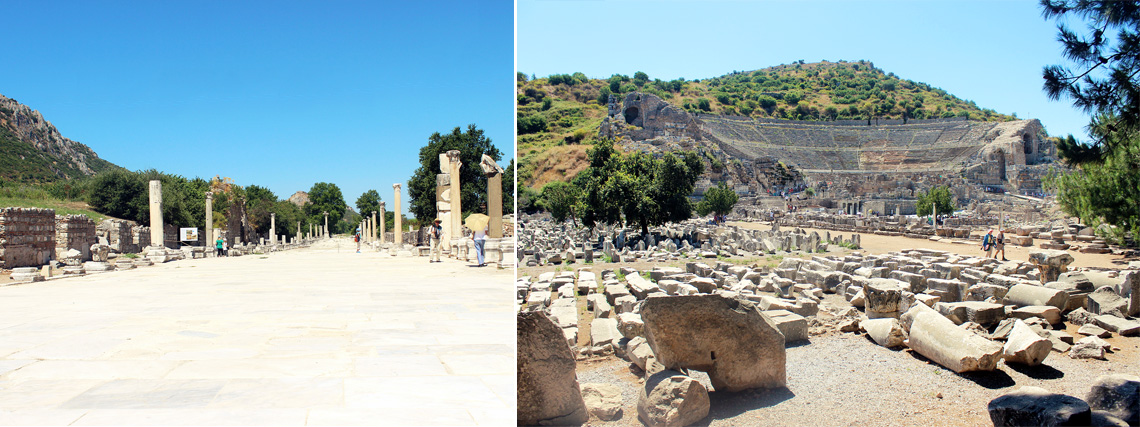
If the Odeon and Celsus Library were captivating, the Great Theater was an impressive sight to behold not only for its magnificent marble construction but also for the biblical significance. Saint Paul is said to have preached the Gospel here. When we took into account the fact that the theater was able to hold 25,000 people, it’s absolutely extraordinary how thousands of people came from all parts to hear St. Paul’s sermons. We could not call ourselves true tourists if we left Ephesus without a single shot of the Great Theater situated right against a beautiful mountain and surrounded by lush trees and rumbling stones.
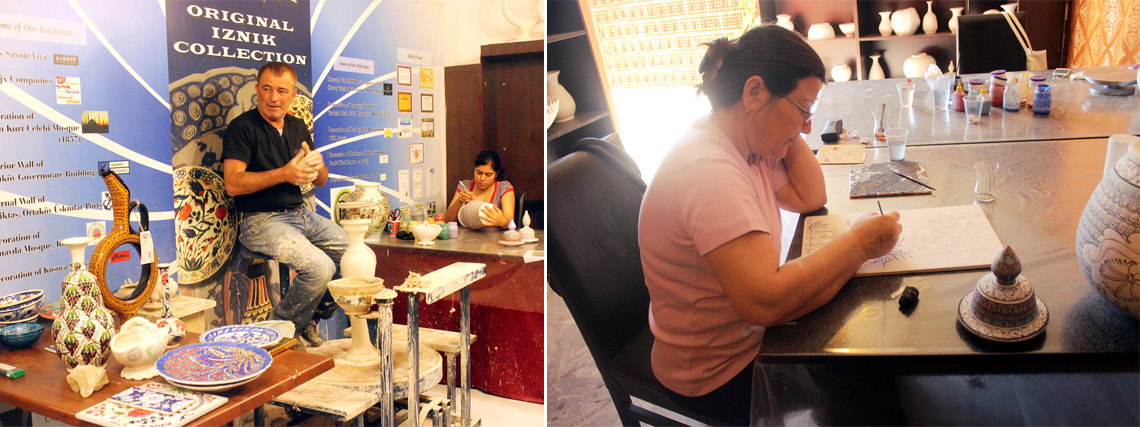
We spent some more time enjoying a last look at Ephesus before getting on the road again. Since we could not leave the area without seeing some of the beautiful handcrafted Turkish pottery, we were taken to a lovely pottery shop to see a master potter at work. Within minutes he had molded a slab of clay into an elaborate vase where he then set it to dry. The dry pieces were then painted by an experienced painter and given the gorgeous hues we have come to associate with Turkish designs. We also got to see a lovely painter sketch a few drafts on paper before recreating a design on an actual ceramic. The tremendous patience that goes to making these intricate designs is beyond words, especially when you see the hours poured to producing quality pieces. We safely gained a deeper respect for this artistry.
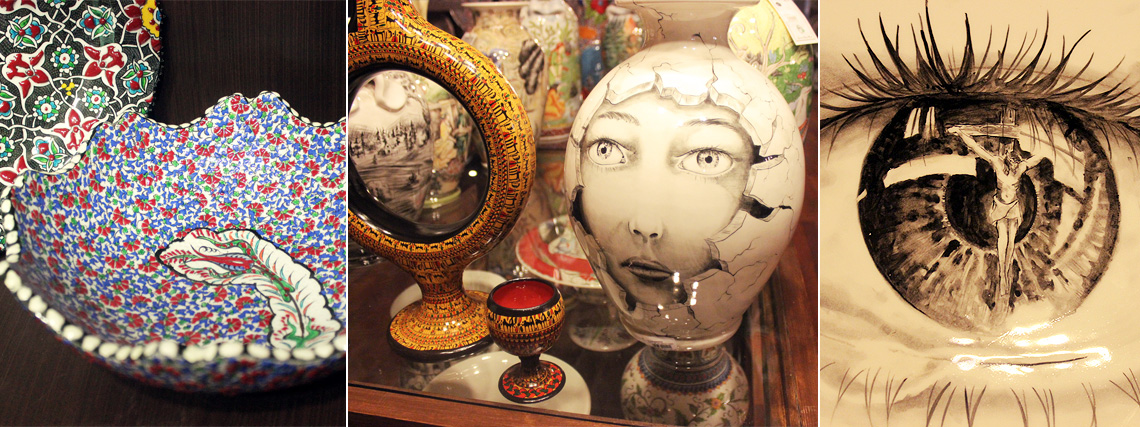
After seeing some of the behind the scenes, we were then taken to the bottom floor where we had the chance to be see the large collection of ceramic trays, plates, vases and tile artwork beautifully displayed on glass tables and along the walls. One of our favorites was a human eye with the image of Jesus Crist on the Cross drawn right on top of the pupil. When we thought we could not be more impressed, a friendly salesman took us to a back room to see a special collection. Once inside the room the lights were turned off and we were cloaked in darkness. Almost immediately the ceramics started to glow in the dark—illuminating the room with a soft green glow. Absolutely magical. It is a shame most of these beautiful ceramics came with a hefty price tag (i.e. a 6 tiled painting cost an approx. $2500 dollars). Despite not being able to take anything home with us, we don’t regret taking the time to visit this authentic Turkish pottery shop. It is definitely a must-go for those travelers visiting Kusadasi for the first time.
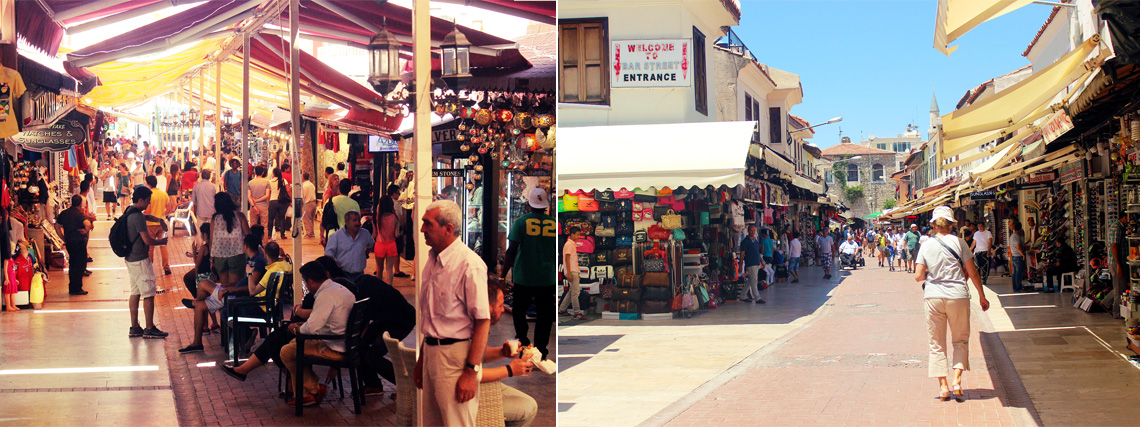
Leaving the pottery shop behind, we headed back to the cruise terminal and city center. Before saying goodbye to Murat (the best tour guide in the world), he pointed us to the right direction of several large bazaars. Although we were forewarned about how incredible the bazaars were prior to landing in this bustling city, nothing could really prepare us for the shopping mecca all around us. It seemed as we step foot into shopper’s paradise. Everywhere we looked, a labyrinth of shops and stalls offered anything and everything from genuine fake designer watches, Turkish rugs, leather goods, jewelry, souvenirs and Turkish sweets. The very air permeated with the scents of warm spice, leather and slight musk.
But be warned the salesmen can be very persistent in trying to attract your attention and your wallet. Here is a tip: Try to walk in the middle of the walkway so you can still see what’s on offer but not bring too much attention to yourself (although not entirely avoidable) so your shopping experience wont be thawed by overzealous salesman trying to sell you on that fake Rolex watch they say is just dying to wrap around your wrist.
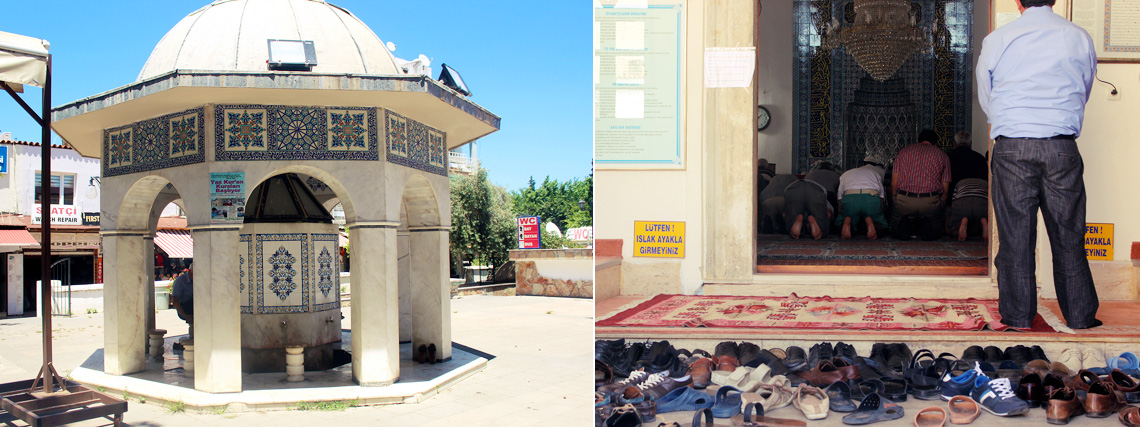
As we continued to walk further along the various stalls and shops, enjoying the colorful selections of pashmina scarfs, leather bags and fun little trinkets we started to hear loud chants. When we asked a friendly boy about these chants he explained to us that they were prayer chants calling Muslim men and women to prayer (occurs four times a day). Curious to get a closer look at this custom we headed towards the noise only to spot a Mosque a few meters away. Once there we quietly observed several Muslim men inside the Mosque barefoot and on their knees in prayer. Just on the right of the small Mosque was a lovely little washroom where worshippers could perform an ablution—the ceremonial act of washing several parts of the body before prayer. After lingering for a few more moments we made our way back to the bazaars to buy a few souvenirs to take home with us.
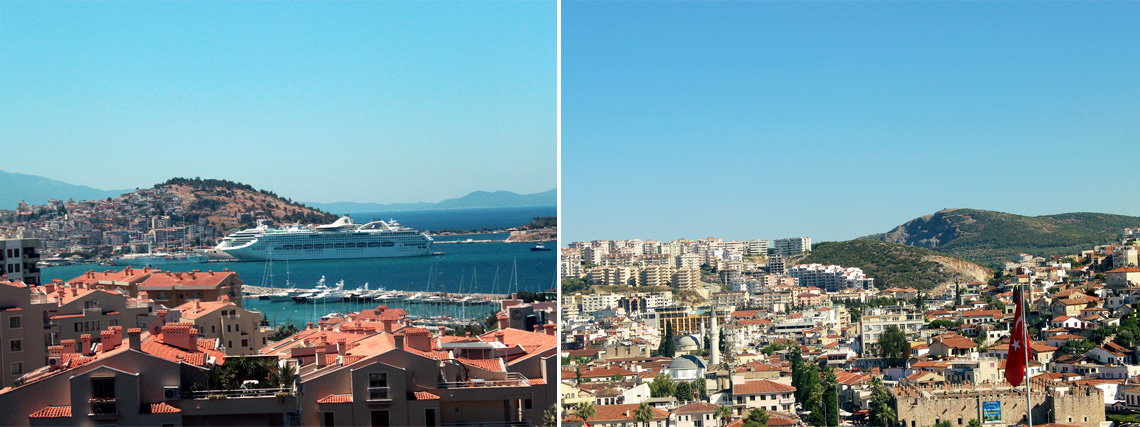
While we had planned to sit down at one of the restaurants by the beach, our tired, aching feet were another story. So we decided to forgo the restaurants and head back to our ship. Right as we were leaving, we caught a magnificent view overlooking the Aegean Sea with its blue-turquoise waters and several of the docked cruise ships by the harbor.
Back on the ship, we headed to our stateroom to leave our belongings and head up to the deck to see the stunning panoramic views of Kusadasi. As always we sat down on the reclining chairs to catch our breath and reflect on the events of the day.
Now we are the first to admit that prior to setting foot in Kusadasi, our knowledge of this bustling city was vague at best. But upon visiting the serene House of the Virgin of Mary, seeing the glorious ruins of Ephesus, and even haggling at the vibrant bazaars, we were reminded of what it means to vacate our daily lives and experience an entirely new culture and way of life that can be very different from our own. And while stepping outside our comfort zone can be daunting at first, seeing the beat of a new city come to life before our very eyes—knowing we have left a small mark there as it has left its mark on us—is truly a once-in-a-lifetime experience.









Comments 1